


1
/
of
3
strutrecords
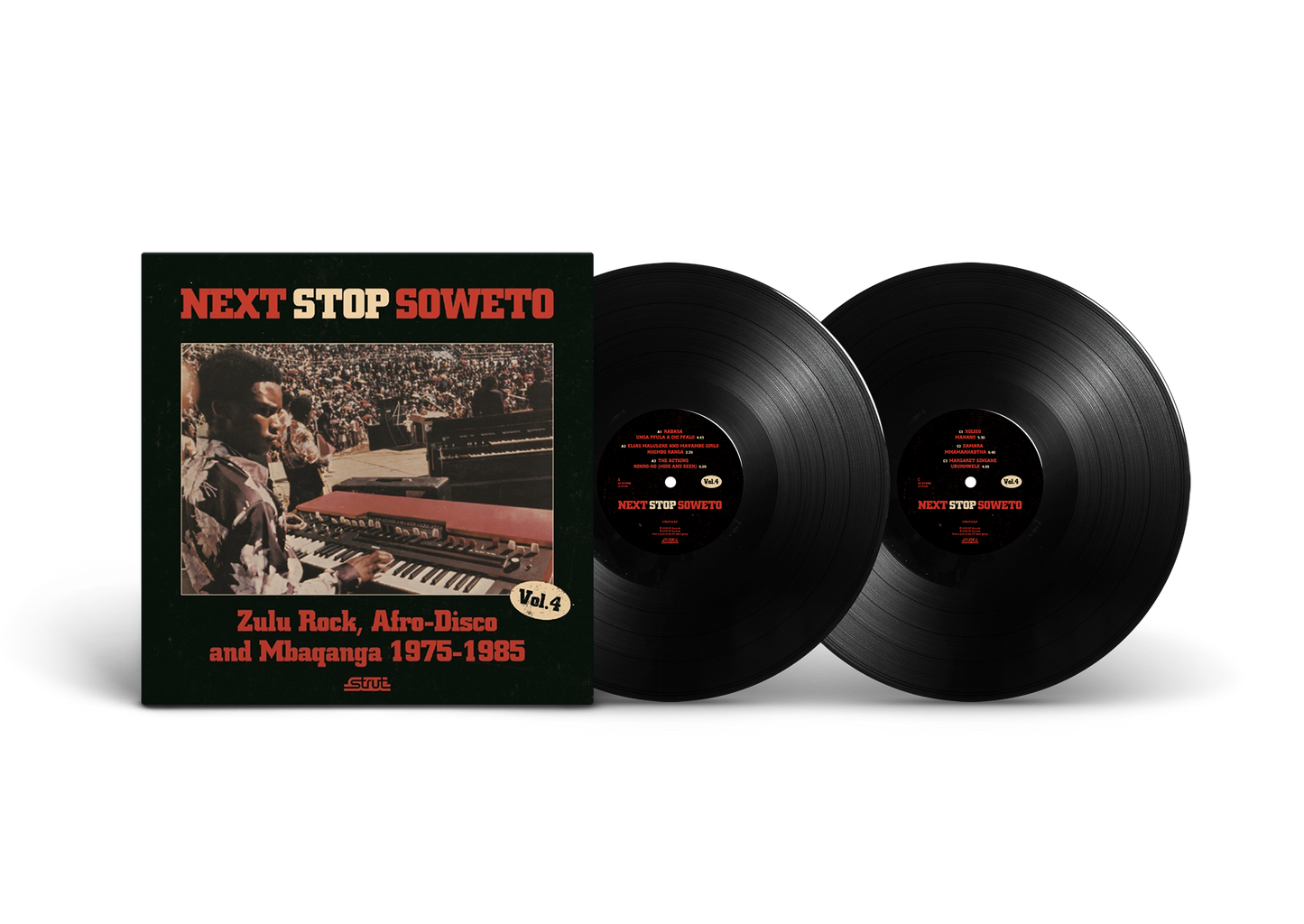
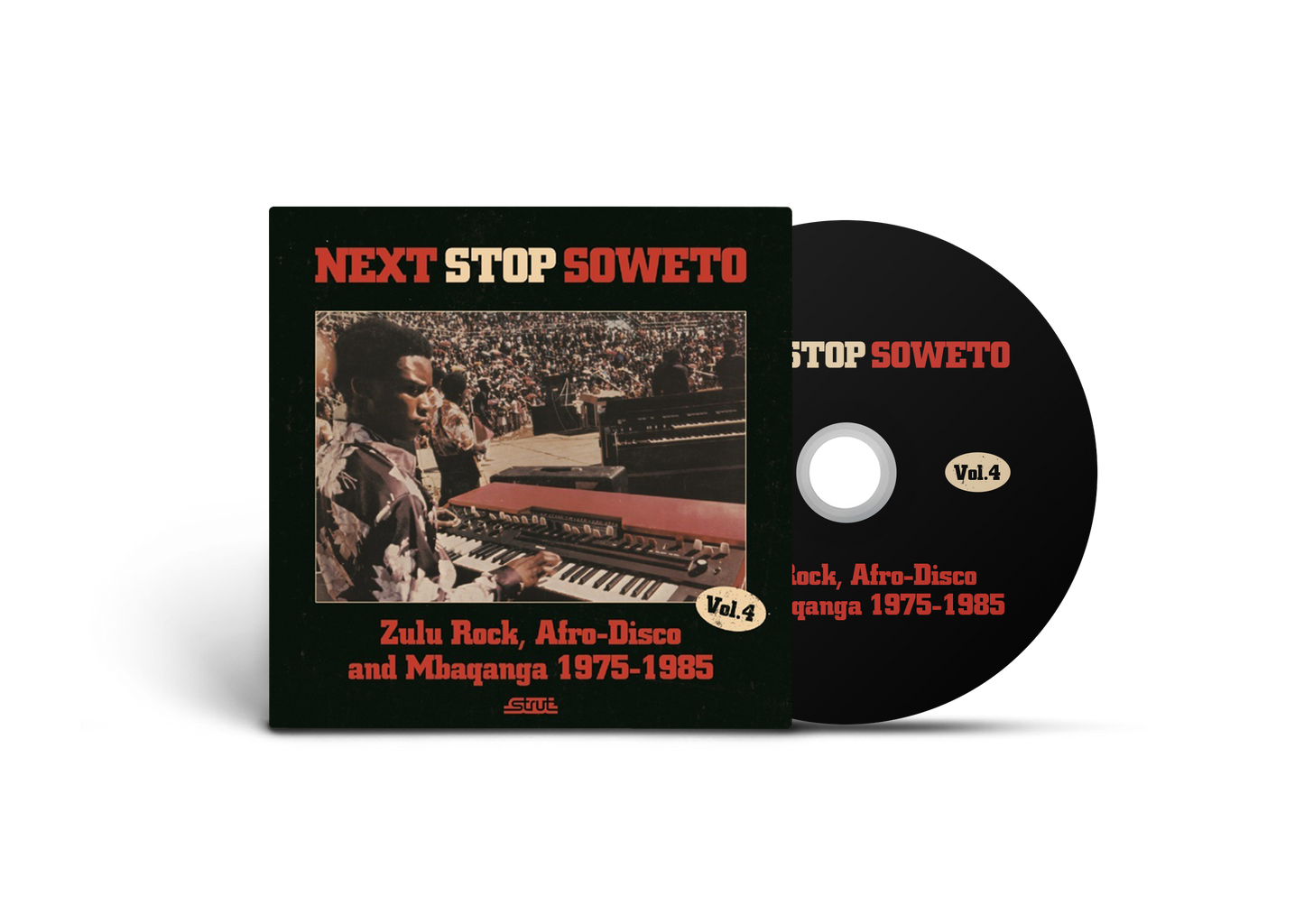
Various Artists 'Next Stop Soweto 4: Zulu Rock, Afro-Disco & Mbaqanga 1975-1985'
Various Artists 'Next Stop Soweto 4: Zulu Rock, Afro-Disco & Mbaqanga 1975-1985'
STRUT121LP
Released on 9 March, 2015
Regular price
€29,95 EUR
Regular price
Sale price
€29,95 EUR
Taxes included.
Shipping calculated at checkout.
Track Listing
Track Listing
A1 Kabasa – Unga Pfula A Chi Pfalo
A2 Elias Maluleke & Mavambe Girls – Khombo Ranga
A3 The Actions – Kokro-Ko (Hide & Seek)
B1 TY Boys – Lekopokopo Single Moqashoa
B2 Almon Memela – The Things We Do In Soweto
B3 The Movers – Soweto Disco
B4 Abafana Bama Soul – Masisizwane
C1 Xoliso – Manano
C2 Damara – Mmamakhabtha
C3 Margaret Singane – Ubukhwele
D1 Isaac & The Sakie Special Band – Get Down
D2 Marumo – Khomo Tsaka Deile Kae?
D3 The Drive – Ain't Sittin' Down Doin' Nothing
A2 Elias Maluleke & Mavambe Girls – Khombo Ranga
A3 The Actions – Kokro-Ko (Hide & Seek)
B1 TY Boys – Lekopokopo Single Moqashoa
B2 Almon Memela – The Things We Do In Soweto
B3 The Movers – Soweto Disco
B4 Abafana Bama Soul – Masisizwane
C1 Xoliso – Manano
C2 Damara – Mmamakhabtha
C3 Margaret Singane – Ubukhwele
D1 Isaac & The Sakie Special Band – Get Down
D2 Marumo – Khomo Tsaka Deile Kae?
D3 The Drive – Ain't Sittin' Down Doin' Nothing
Quantity
Couldn't load pickup availability
2LP, CD
Strut continue their acclaimed ’Next Stop Soweto’ series as they return to the rich archives of South African music to spotlight the fertile era of the late ’70s and early ’80s. Tightly controlled by oppressive Apartheid laws, South Africa’s music scene had nevertheless progressed into myriad new directions, embracing funk, soul, rock and disco.
The era marked a crossroads for the country’s black musicians. While domestic stars of mbaqanga like Mahotella Queens had temporarily disbanded during the onslaught of disco, younger artists like T.Y. Boys and Elias Maluleke embraced and progressed the style in new ways, adding punk and disco touches to the familiar bassline swing.
For all South African musicians during this time, it was a considerable struggle to operate. Following the Soweto Uprising in ’76, bands would play live shows despite live performance restrictions with freedom of gathering strictly curtailed and curfews imposed. The Radio Bantu group of stations were among the few media outlets for black musicians to get their music heard. For most, music was no way to make a living and many musicians were forced to hold down other jobs.
Despite the harsh conditions, the period documented in ’Next Stop Soweto 4’ was a hugely important one for South African music, setting the stage for the ’world music’ explosion of the 1980s when South African artists like the reformed Mahotella Queens, Hugh Masekela and Ladysmith Black Mambazo would find a global crossover audience and Western artists like Malcolm McLaren and Paul Simon with his infamous ’Graceland’ project would embrace the sounds of the townships.
The era marked a crossroads for the country’s black musicians. While domestic stars of mbaqanga like Mahotella Queens had temporarily disbanded during the onslaught of disco, younger artists like T.Y. Boys and Elias Maluleke embraced and progressed the style in new ways, adding punk and disco touches to the familiar bassline swing.
For all South African musicians during this time, it was a considerable struggle to operate. Following the Soweto Uprising in ’76, bands would play live shows despite live performance restrictions with freedom of gathering strictly curtailed and curfews imposed. The Radio Bantu group of stations were among the few media outlets for black musicians to get their music heard. For most, music was no way to make a living and many musicians were forced to hold down other jobs.
Despite the harsh conditions, the period documented in ’Next Stop Soweto 4’ was a hugely important one for South African music, setting the stage for the ’world music’ explosion of the 1980s when South African artists like the reformed Mahotella Queens, Hugh Masekela and Ladysmith Black Mambazo would find a global crossover audience and Western artists like Malcolm McLaren and Paul Simon with his infamous ’Graceland’ project would embrace the sounds of the townships.
released March 9, 2015
2015, Strut Records - a division of K7 Music GmbH
Share

GPSR Information
Manufacturer Information
Name: K7 Music GmbH
Address: Gerichtstr. 35
Email: GPSR@k7.com
Website: https://k7.com/contact/
European Manufacturer: Yes
Importer Information
Name: K7 Music GmbH
Address: Gerichtstr. 35 DE- 13347 Berlin
Email: GPSR@k7.com
Website: https://k7.com/